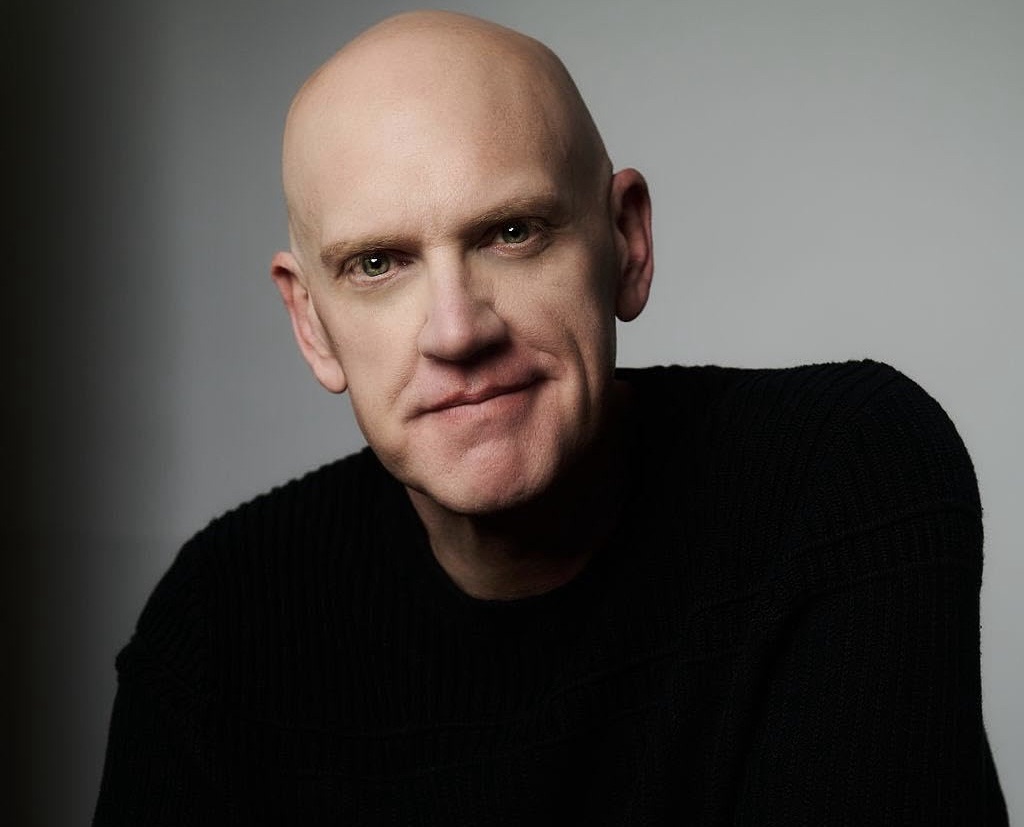
Before helping shape one of independent horror’s biggest breakout films, Jeff Barker spent years telling real stories on television and listening to people during the hardest moments of their lives. Today, those experiences inform every screenplay he writes.
When audiences think about Obsession, they naturally think of writer-director Curry Barker.
What many don’t realize is that one of the film’s earliest creative sounding boards was someone who has spent an entire career studying how people think, communicate and cope with trauma.
Jeff Barker never set out to become a screenwriter.
Long before scripts, contests and production meetings, he built careers in television journalism and psychiatry, two professions that, on the surface, couldn’t seem more different. Looking back now, though, Barker believes they were preparing him for storytelling all along.
“I’ve been writing for 25 years,” Barker said.
Even while working as a television news anchor and later in psychiatric hospitals, writing never disappeared. Novels, short stories and manuscripts filled the hours outside of work. It wasn’t until his son Curry began writing Obsession that screenwriting entered the picture.
A Psychiatrist’s Perspective on Character
Few writers spend years sitting across from people during the darkest moments of their lives.
Barker did.
Working in psychiatry taught him something he says no textbook ever could: empathy.
Rather than viewing trauma as something to exploit dramatically, he learned how people protect themselves from pain through defense mechanisms, distorted thinking and emotional survival. Those observations naturally found their way into his writing.
“It’s so influential to me,” Barker explained, describing how years spent listening to patients shaped the emotional foundation of nearly every character he writes.
That perspective also influenced conversations with Curry throughout Obsession’s development. Barker praised the film’s willingness to explore difficult psychological themes without reducing its characters to simple heroes or villains.
Even Bear—the film’s deeply flawed antagonist—is written as a human being rather than a caricature.
“It’s important to write well-rounded characters that are not all good or all evil,” Barker said.
The Consultant Behind Obsession
Although Barker served as a script consultant during Obsession’s development, he’s quick to clarify what that role actually meant.
Curry wrote the screenplay himself.
Jeff wasn’t there to rewrite scenes or reshape the story. Instead, he became a trusted creative sounding board whenever ideas needed another perspective.
That experience unexpectedly introduced him to the mechanics of professional screenwriting.
He began reading three to four screenplays every week, breaking them apart page by page to understand why they worked.
“I wanted to take it apart piece by piece… and then try to put it back together,” he said.
The process soon evolved into The Screenplay Lab, where Barker publicly analyzes produced screenplays—not as a film critic, but as a student of storytelling. Each breakdown often requires more than fifteen hours of study, something he says has become his own version of film school.
When Obsession Changed Everything
Like the rest of the Barker family, Jeff knew Obsession had potential.
None of them expected what happened next.
The independent horror film exploded into one of the year’s biggest success stories, opening doors for nearly everyone involved.
For Jeff, that success accelerated opportunities that had been building quietly for years.
He now has multiple screenplays in development, recently wrapped directing his short film Good Tape, and is preparing to direct another ambitious project, Medium Rare, later this year.
“It’s life-changing,” Barker said of the momentum surrounding his career.
It’s Never Too Late
Perhaps the most memorable part of the conversation wasn’t about Obsession at all.
It was Barker’s outlook on pursuing creative work later in life.
Inspired by watching his sons build careers in filmmaking, he decided to stop waiting and begin directing his own stories.
His advice for aspiring filmmakers was refreshingly uncomplicated.
“If you really want this, then do it.”
For Barker, success isn’t about avoiding rejection.
It’s about refusing to let rejection become the reason you stop creating.
After careers in journalism, psychiatry and now screenwriting, his journey serves as a reminder that there isn’t one path into filmmaking.
Sometimes the experiences that seem unrelated become the very thing that gives an artist their voice.


Leave a Reply