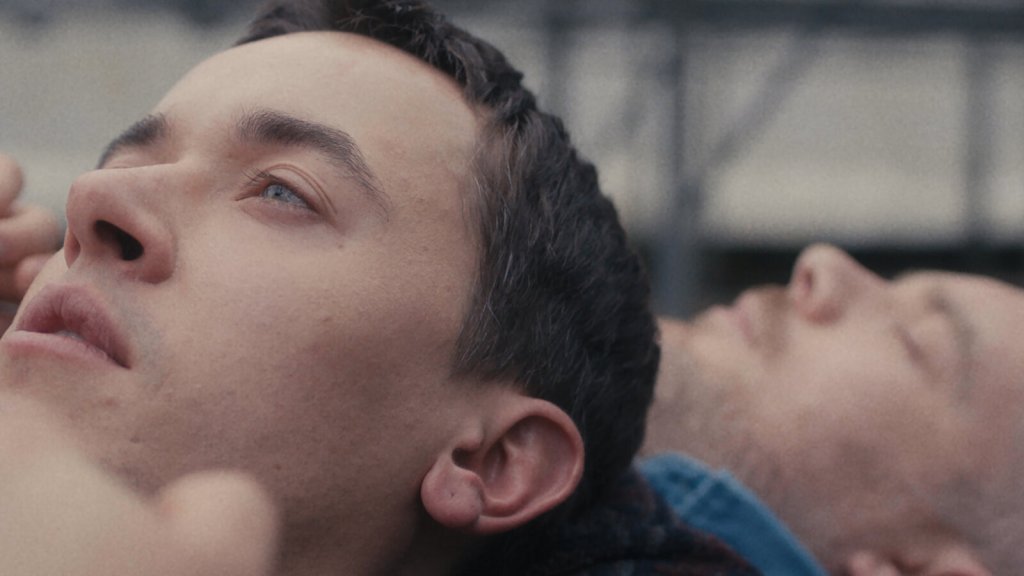
A quiet, emotionally layered performance from Tom Blyth anchors one of the most intimate indie films of the year.
There’s something quietly devastating about Plainclothes.
On the surface, it’s a story about an undercover officer tasked with entrapping gay men in 1990s New York. But beneath that premise is something far more personal… something internal, conflicted, and deeply human. It’s a film that doesn’t rely on spectacle or heavy-handed storytelling. Instead, it leans into restraint, letting its performances do the work.
And that’s where Plainclothes really finds its power.
Plainclothes lives and dies by its central performance, and Tom Blyth carries that weight with a kind of quiet control that’s hard to ignore. His portrayal feels less like someone “playing a role” and more like someone navigating a reality they don’t fully understand yet. There’s tension in the stillness, in the hesitation, in the moments where nothing is said but everything is felt.
That internal conflict becomes the film’s backbone.
Rather than over-explaining its themes, the film trusts the audience to sit with discomfort. There are moments where you want more context, more clarity, but that absence feels intentional. It mirrors the character’s own inability to fully process what he’s going through. The result is an experience that feels more immersive than explanatory.
The chemistry between Blyth and Russell Tovey adds another layer to the film’s emotional core. Their dynamic never feels forced or overly dramatized. Instead, it unfolds naturally, almost cautiously, which makes the connection between them feel real in a way that lingers.
What stands out most about Plainclothes is its willingness to stay small.
It doesn’t try to be bigger than it is. It doesn’t chase moments. It lets them happen.
That restraint won’t work for everyone. Some viewers will want more structure, more explanation, more traditional storytelling. But for those willing to sit with it, the film offers something more subtle—an exploration of identity, repression, and vulnerability that feels grounded rather than performative.
It’s not a loud film.
But it doesn’t need to be.
 Take One Press
Leave a comment