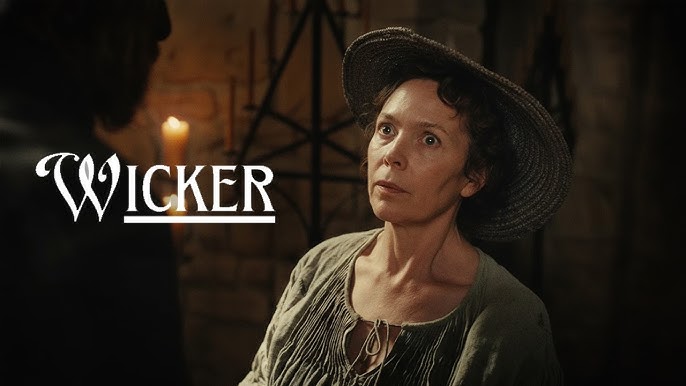
In a film landscape that often plays it safe, Wicker feels like a breath of sea air, strange, slightly off-putting, and impossible to ignore.
Directed by Alex Huston Fischer and Eleanor Wilson, this genre-blending indie leans into its oddball premise with confidence. A fisherwoman, ostracized by her seaside village for being “unmarried, stinky, and different,” orders herself a wicker husband in a quiet act of rebellion. What unfolds is something far more layered than its surreal setup suggests.
At first glance, Wicker plays like a dark fairytale with comedic edges. But underneath the humor and fantasy is a story about isolation, judgment, and the human need to be seen beyond surface-level perceptions. It’s that balance, between absurdity and sincerity, that gives the film its edge.
Critics have already begun to take notice. Some have compared the film’s tone to a kind of medieval Edward Scissorhands, where every frame feels intentional, stylized, and alive. Others highlight its ability to remain consistently entertaining, calling it “wacky but amusing in the right ways,” and praising its status as a standout Sundance gem worth seeking out.
And that’s really where Wicker finds its strength, it never loses control of its tone. The humor lands, but it never undercuts the emotional core. The fantasy elements feel whimsical, but they’re grounded in something deeply human. Even in its strangest moments, the film remains accessible because its themes are so familiar.
The cast elevates the material even further. With Olivia Colman leading the charge, backed by a lineup that includes Alexander Skarsgård and Elizabeth Debicki, the performances give the film a level of authenticity that keeps it from drifting too far into novelty. There’s a quiet commitment to the world that makes even the most unusual elements feel believable.
Visually, Wicker leans into its identity. There’s a handcrafted, almost storybook-like quality to its presentation, something that feels deliberate rather than polished to perfection. It adds to the charm, reinforcing the idea that this is a film more interested in feeling than formula.
At its core, Wicker is about what happens when someone refuses to conform. It’s about reclaiming agency in a world that’s quick to define you. And it’s about finding connection, even if that connection looks a little different than expected.
It may not be for everyone, but that’s exactly the point.
Wicker doesn’t try to fit in, and because of that, it stands out.


Leave a Reply