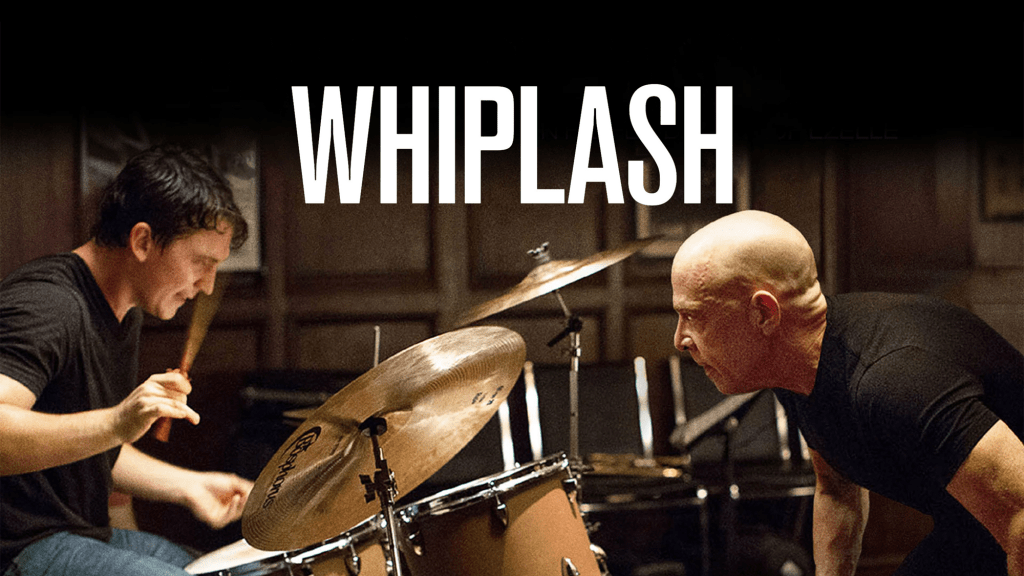
When discussing modern independent films that broke through to mainstream audiences, few titles command the same respect as Whiplash.
Released in 2014 and directed by Damien Chazelle, the film began as a modest independent project before becoming a cultural phenomenon. More than a decade later, its impact remains undeniable.
At its core, Whiplash is a story about ambition. Andrew Neiman, played by Miles Teller, is a young jazz drummer determined to become one of the greats. Standing in his way, or perhaps pushing him toward greatness, is Terence Fletcher, a ruthless music instructor portrayed by J.K. Simmons in one of the most electrifying performances of the 21st century.
What makes Whiplash so effective isn’t simply its story. It’s the intensity with which that story is told.
The film transforms jazz performance into something that feels closer to a psychological thriller than a traditional music drama. Every rehearsal feels like a battle. Every performance feels like life or death. Chazelle’s direction places viewers directly inside Andrew’s obsession, forcing us to confront the same question that drives the film: What are we willing to sacrifice in pursuit of greatness?
Miles Teller delivers a career-defining performance, capturing both Andrew’s determination and self-destruction. Meanwhile, J.K. Simmons’ Fletcher remains one of cinema’s most unforgettable antagonists. He is terrifying, manipulative, and at times strangely compelling, making audiences question whether his brutal methods are genius or abuse.
Visually, Whiplash punches far above its budget. Tight editing, kinetic camerawork, and an incredible jazz score create a level of tension rarely seen in independent filmmaking. The now-iconic finale remains one of the most exhilarating endings in modern cinema, a sequence that continues to spark discussion years after the film’s release.
The film went on to earn five Academy Award nominations, winning three, including Best Supporting Actor for Simmons. Yet awards only tell part of the story.
Whiplash endures because its themes are universal. Whether you’re a musician, athlete, artist, filmmaker, or simply someone chasing a dream, the film’s exploration of ambition, sacrifice, and perfectionism feels deeply personal.
More than ten years later, Whiplash stands as proof that independent cinema can be just as powerful, intense, and culturally significant as any blockbuster. It remains not only one of the defining films of the 2010s, but one of the greatest independent films ever made.
And when the final drum solo begins, it still feels impossible to look away.


Leave a Reply