If Hollywood executives were looking for proof that audiences are craving something different, they found it this summer.
While studios continued pouring hundreds of millions into sequels and established franchises, three original films found themselves at the center of the conversation: Obsession, Backrooms, and Carolina Caroline. Yet despite sharing the same theatrical landscape, their box office journeys couldn’t have been more different.
Obsession: The Horror Phenomenon Nobody Saw Coming
Few films have shocked the industry quite like Obsession.
Directed by YouTube creator Curry Barker and produced for a reported budget of roughly $750,000, the horror-romance opened to $17.2 million domestically before doing something almost unheard of in modern box office history, it grew in its second weekend. The film surged 39% in weekend two, fueled almost entirely by word-of-mouth and social media buzz.
What started as a promising indie horror release quickly became a cultural event.
By early June, Obsession had crossed $224 million worldwide, becoming the highest-grossing film in the history of Focus Features. The film’s combination of disturbing imagery, twisted romance, and breakout performances, particularly from Inde Navarrette as Nikki, helped transform it from a niche horror title into a mainstream sensation.
For a movie made on such a microscopic budget, its success is almost impossible to overstate. It wasn’t just profitable, it became one of the biggest return-on-investment stories Hollywood has ever seen.
Backrooms: Gen Z’s Horror Empire Arrives
If Obsession was the slow-burning phenomenon, Backrooms was the explosion.
Based on the viral internet horror concept created by Kane Parsons, the A24 release opened to more than $81 million domestically and over $118 million worldwide in its opening weekend, instantly becoming the biggest theatrical opening in A24 history.
The film resonated with younger audiences who grew up watching Parsons’ YouTube shorts and engaging with online horror communities. What could have been a niche internet adaptation instead became a mainstream blockbuster.
Just weeks into its run, Backrooms had already surpassed $200 million globally, making it A24’s highest-grossing film ever and cementing Parsons as one of the industry’s most exciting young filmmakers.
Perhaps most impressive is that Backrooms proved internet-born storytelling can compete with traditional Hollywood franchises. In an era dominated by sequels and reboots, audiences showed up in massive numbers for a story that began as a creepy image shared online.
Carolina Caroline: A Different Kind of Success
Then there’s Carolina Caroline.
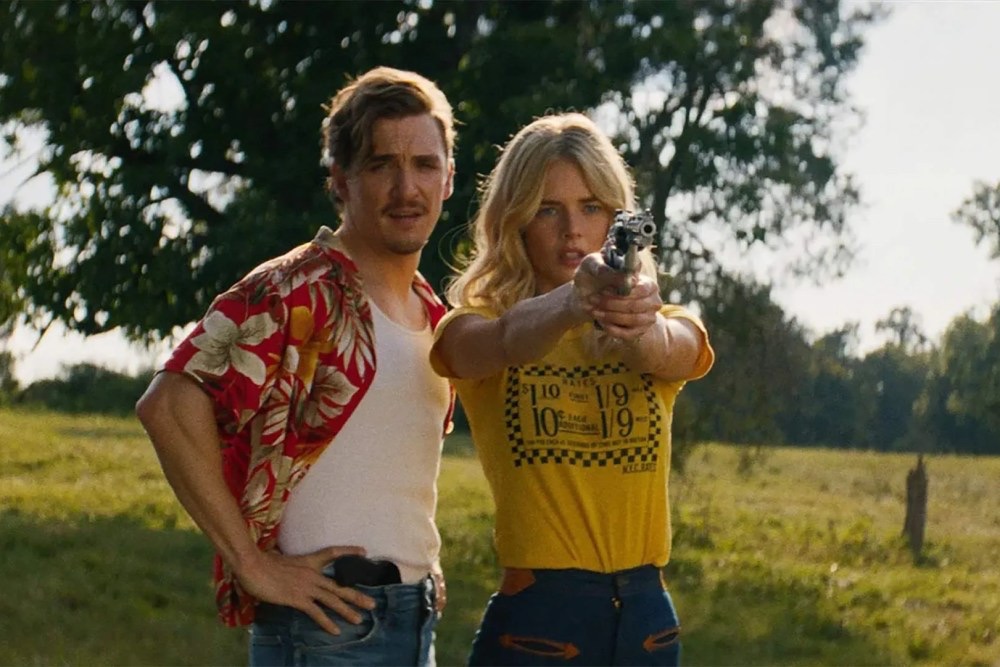
Unlike the viral phenomena surrounding Obsession and Backrooms, Magnolia Pictures’ crime-romance thriller starring Samara Weaving arrived quietly in a limited theatrical release. Opening on just over 240 screens, the film earned approximately $110,000 during its opening weekend.
On paper, those numbers look modest compared to the hundreds of millions earned by the summer’s horror breakouts.
But Carolina Caroline was never designed to compete with them.
The film emerged from the festival circuit and targeted arthouse audiences rather than multiplex crowds. For Magnolia, success isn’t necessarily measured by blockbuster grosses but by critical reception, streaming performance, awards attention, and long-term audience discovery.
While Obsession and Backrooms became cultural moments overnight, Carolina Caroline represents the kind of smaller, character-driven filmmaking that often finds its audience gradually.
The Real Story
What’s fascinating isn’t simply that Obsession and Backrooms made money.
It’s who made them.
A 26-year-old YouTube filmmaker. A 20-year-old internet horror creator.
Together, the two films have generated more than $440 million worldwide and have become some of the defining success stories of the year.
For years, Hollywood executives have searched for ways to attract younger audiences back to theaters. This summer’s answer may have been sitting on YouTube all along.
And while Carolina Caroline took a quieter path, its release serves as a reminder that there is still room for smaller original stories amid the noise.
One film became a viral obsession.
One transformed an internet legend into a blockbuster.
And one continued the tradition of independent cinema finding its audience one viewer at a time.
Together, they tell the story of a movie industry that’s changing faster than anyone expected.


Leave a Reply