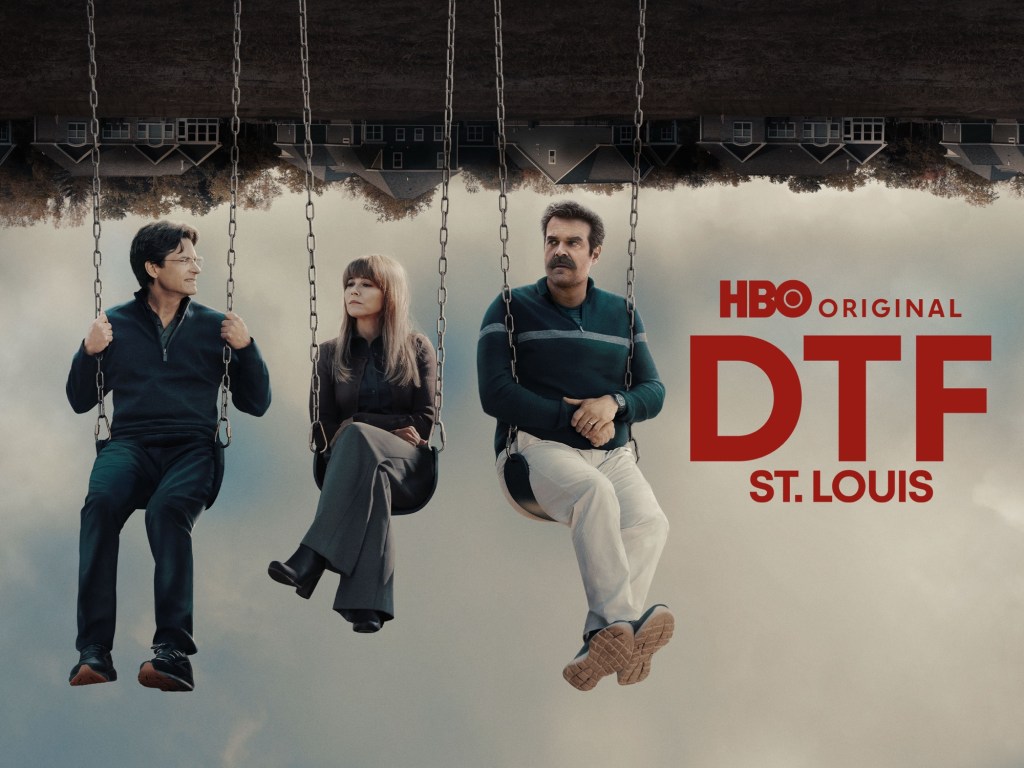
In an era where television can disappear into endless streaming libraries, HBO’s DTF St. Louis has managed to do something increasingly rare: spark conversation.
The acclaimed limited series, starring Jason Bateman, David Harbour, and Linda Cardellini, has become one of HBO’s most talked about projects of the year. For creator Steve Conrad, however, the moment he realized the show had truly found an audience wasn’t tied to ratings reports or awards recognition.
It happened in a bar.
Speaking with IndieWire, Conrad recalled sitting with his banker in his favorite Chicago bar when he overheard a bartender discussing DTF St. Louis with customers. The twist? She wasn’t praising the series.
She was criticizing it.
For Conrad, that was enough.
After years of creating projects that developed passionate cult followings but often struggled to find mainstream audiences, hearing strangers discuss the show at all felt like a victory. The conversation itself was proof that people were watching, thinking, and engaging with the story.
That reaction feels fitting for a series built around complicated people making messy decisions.
Conrad originally approached DTF St. Louis as an opportunity to explore the murder-mystery genre while still focusing on the humanity behind the mystery. Rather than constructing a traditional whodunit filled with misdirection, he wanted audiences to spend time with characters who felt real, people capable of mistakes, desperation, and ultimately redemption.
The creator also spoke about the trust required to bring the project to life. Working with Bateman, Harbour, and Cardellini for the first time, Conrad was immediately struck by how naturally the cast understood the tone of the material. Their performances allowed the series to balance tension, humor, and vulnerability without leaning too heavily on any one element.
That balance became one of the defining strengths of DTF St. Louis.
Even the title carried a purpose. Conrad chose St. Louis specifically because it created a contrast between audience expectations and the show’s themes. He wanted a setting that felt familiar and ordinary on the surface, making the emotional complexity underneath all the more surprising.
It’s a reminder that compelling stories don’t belong exclusively to New York, Los Angeles, or other entertainment capitals. Sometimes the most interesting stories emerge from places audiences assume they already understand.
As DTF St. Louis continues to earn critical acclaim and audience attention, Conrad seems less interested in numbers than in something far more difficult to manufacture: genuine engagement.
People are talking.
Whether they love it or hate it, they’re talking.
And for a storyteller, that may be the greatest sign of success there is.


Leave a Reply